Someone posted this on Facebook and I had to share it. Looks like someone made some new additions to the standard copy editing/proofreading symbols. I especially like the axe used to mean “remove permanently from your lexicon” and the trowel which symbolizes “cut the crap”. I could definitely use these in my own writing!
R.I.P. Rocket Man, Ray Bradbury
While the news isn’t new, I couldn’t not post something about the passing of visionary, Ray Bradbury. When I read the news that he had died on Tuesday, I was in Dallas on a layover. Although I always suspected his time wasn’t far off as he was getting up there in years, the news made me swell up with grief .
I discovered Bradbury when my 9th grade English teacher handed out copies of Fahrenheit 451. From then on, I was hooked. I tried out some other science fiction after discovering Bradbury but nothing could match his dark, lyrical genius. He surpassed any genre. His stories were more about human beings than outer space or robots.
Three random things of note (to me, anyway):
1) I remember almost meeting him once about 12 years ago. There was a writing conference here in Tucson that he was supposed to attend. I raced over to discover he had to stay home due to a small stroke.
2) I bought The Bradbury Chronicles about three weeks ago and it’s on my bedside table.
3) How apropos that he left this world on the day of the the Venusian eclipse.
In honor of Mr. Bradbury’s passing, here is a scene that has stuck with me for years. It’s a short story called “Kaleidoscope” from The Illustrated Man. This is the very end of the story when Hollis, an astronaut whose rocket has blown up, is racing toward earth and toward his death:
He fell swiftly, like a bullet, like a pebble, like an iron weight, objective all of the time now, not sad or happy or anything, but only wishing he could do a good thing now that everything was gone, a good thing for just himself to know about. When I hit the atmosphere, I’ll burn like a meteor. “I wonder” he said, “if anyone’ll see me?”
The small boy on the country road looked up and screamed. “Look, Mom, look! A falling star!” The blazing white star fell down the sky of dusk in Illinois. “Make a wish,” said his mother. “Make a wish.”
Jennifer Egan Using Twitter to Pen “Black Box”
Jennifer Egan is mixing it up in the literary world by tweeting a short story on Twitter. The story, Black Box, is a thriller set in the future. Egan is tweeting the short story in ten nightly installments from 8 to 9 P.M. E.T. via the New Yorker’s Fiction Twitter account – @NYerFiction. About her decision to tweet a story, Egan told the New Yorker:
“I’d also been wondering about how to write fiction whose structure would lend itself to serialization on Twitter. This is not a new idea, of course, but it’s a rich one-because of the intimacy of reaching people through their phones, and because of the odd poetry that can happen in a hundred and forty characters. I found myself imagining a series of terse mental dispatches from a female spy of the future, working undercover by the Mediterranean Sea.”
Egan isn’t the first to delve into this sort of experiment. Neil Gaiman and Melvin Burgess have also written fiction on Twitter in the past. The idea is reminiscent of serialized radio shows before there was TV. Reading a story on Twitter must be like having a TV show to read on your phone. It’s definitely an intriguing idea and I imagine could become a trend in the future. I’m not sure exactly how it will feel to read anything in real time on my phone. I guess I’d better finally open a damned Twitter account to find out.
If you’ve missed Egan’s tweets and want to catch up on the story or you’re just not a tweeter, you can read what she’s penned so far here.
Henry Shukman’s Lost City
I recently finished The Lost City by Henry Shukman. Shukman is a British literary gem who writes poetry, non-fiction, and fiction. His writing is on par with big names in the living literati like Eugenides, Murakami, and Franzen and I’m surprised I don’t see his name more. Before reading The Lost City, I read a book he wrote called Savage Pilgrams: On the Road to Santa Fe, a non-fiction account of his love affair with New Mexico where he now lives. (I lost the book when I was almost to the end and thus couldn’t finish. I’m determined to find it or at least buy it again one of these days!)
The Lost City is a novel about a young British expat named Jackson Small who suffers PTSD and has recently been discharged from the British military. More importantly, he is haunted by a “lost city” in Peru called “La Joya” that his deceased best friend Connelly was obsessed with. Small sets out to Peru in search of the city to honor the memory of Connelly. During his quest, Small meets numerous obstacles and characters integral to his transformation.
The story is a little bit adventure, a little bit travelogue, and flavored with a dose of romance. Unfortunately his love interest, an American named Sarah, is not a fully realized character in my mind. I never connected with her because I never felt like I knew who she really was. Apart from Sarah, the other characters in the book are fully realized. They include a ruthless drug lord, a priest who runs an orphanage, a hippy with two wives, a burned out British consulate, and a tenacious orphan named Ignacio who accompanies Small on most of his adventure.
Most of all, Shukman nails the sense of place in this book like he does in Savage Pilgrims. I’ve been to Peru several times and when I read the book, I marveled at how well Shukman brings the place alive on the page. You can see, hear, smell, and feel the dirty, complicated, and beautiful heart of Peru. He’s obviously traveled there quite a bit. There’s a part in The Lost City that involves Small lost in a place called “The Cloud Forest” that will live with me for the rest of my life. Shukman does natures like few others I’ve read.
This book begs to be made into a film. Frankly, I’m surprised no Hollywood big wigs have picked it up yet I’m glad they haven’t. I don’t think anyone could bring “The Cloud Forest” to life the way Shukman does.
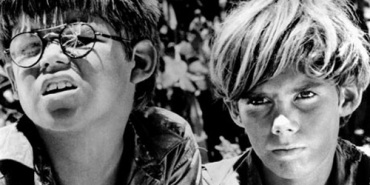
‘Lord of the Flies’ Still Reigns
My latest column on PopMatters is now up. It’s a look at Lord of the Flies, by William Golding, the original story about kids surviving in a post-apocalyptic world.
Ouch! Classic Works Scorched Back in the Day
If you’re a writer whose gotten lukewarm reviews for something you’ve penned or your rejection folder is disturbingly full, CHIN UP! You’re in good company. Really good company. Over at Mental Floss, they have a post titled. 11 Early Scathing Reviews of Works Now Considered Masterpieces.
- Among them is Walt Whitman’s Leaves of Grass review from The Atlantic in 1882:
“… the book cannot attain to any very wide influence.”
- And there was this scathing review of Moby Dick:
“…Our author must be henceforth numbered in the company of the incorrigibles who occasionally tantalize us with indications of genius, while they constantly summon us to endure monstrosities, carelessnesses, and other such harassing manifestations of bad taste as daring or disordered ingenuity can devise…” -Henry F. Chorley, London Athenaeum, October 25, 1851
- Emily Bronte wasn’t imune to bad press for Wuthering Heights:
“How a human being could have attempted such a book as the present without committing suicide before he had finished a dozen chapters, is a mystery. It is a compound of vulgar depravity and unnatural horrors.” –Graham’s Lady Magazine
- Emily’s sister, Charlotte, was less than enthusiastic about Jane Austen’s Pride and Prejudice:
“Anything like warmth or enthusiasm, anything energetic, poignant, heartfelt, is utterly out of place in commending these works: all such demonstrations the authoress would have met with a well-bred sneer, would have calmly scorned as outré or extravagant…”
- Another instance of a writer who gave his two cents about another writer’s work was George Bernard Shaw letting the world know how he really felt about Ulysses penned by his fellow countryman James Joyce:
“In Ireland they try to make a cat clean by rubbing its nose in its own filth. Mr. Joyce has tried the same treatment on the human subject.”
- They also included a couple rejections, one of which was Orwell’s Animal Farm, of which a publisher said:
“It is impossible to sell animal stories in the USA.”
- And then there was the presumably deaf and blind testing director at MGM who said about Fred Astaire:
“Can’t act. Can’t sing. Slightly bald. Can dance a little.”
Read the whole list here.
“Writer Idol”: I Was Wondering When This Might Happen
According to The Guardian, the latest slew of contests for would-be popsters, dancers, models, and even artists has moved into the writing realm. Hence, “Writer Idol”. No, it’s not a TV show, more like a talent contest that unfolds in front of judges, other writers, and onlookers. Writer Idol will take place in Ireland at the West Cork Literary Festival. According to The Guardian, it will go something like this:
This comes on the heals of another event also called Writer Idol that takes place each year at the Boston Book Festival. Perhaps more happen at other literary festivals that I don’t know about.
Apparently there are no prizes involved, no book deals, no fame or fortune – just a chance for writers to get their work read by some big wigs in the industry and an audience. It makes all the cutthroat literary workshops I took in grad school seem like child’s play. I guess in a time when it’s nearly impossible for writers to get our work read anywhere, it can’t hurt. Desperate times call for desperate measures. Now I have to wonder when they’ll make it a TV show.